When someone you care about has dementia, it’s hard to see them struggle. You might notice they seem less interested in things they once loved or appear sad and withdrawn.
But how do you tell the difference between apathy and depression in dementia? Understanding this difference is important because it affects how your loved one is treated and cared for. If you want to know what signs to look for and how to support them better, keep reading.
This article will help you recognize the subtle clues that separate apathy from depression and guide you toward the right steps to make a real difference.

Credit: onlinelibrary.wiley.com
Apathy In Dementia
Apathy is a common symptom in people with dementia. It means a loss of interest or motivation. People with apathy may seem dull or less involved in activities they once enjoyed. This can be confusing for families and caregivers. Understanding apathy helps in better care and support.
Common Symptoms
People with apathy may show less emotion and energy. They might not start tasks on their own. Talking less or avoiding social contact is usual. They often appear indifferent to events around them. Simple daily choices may seem difficult or unimportant.
Causes And Triggers
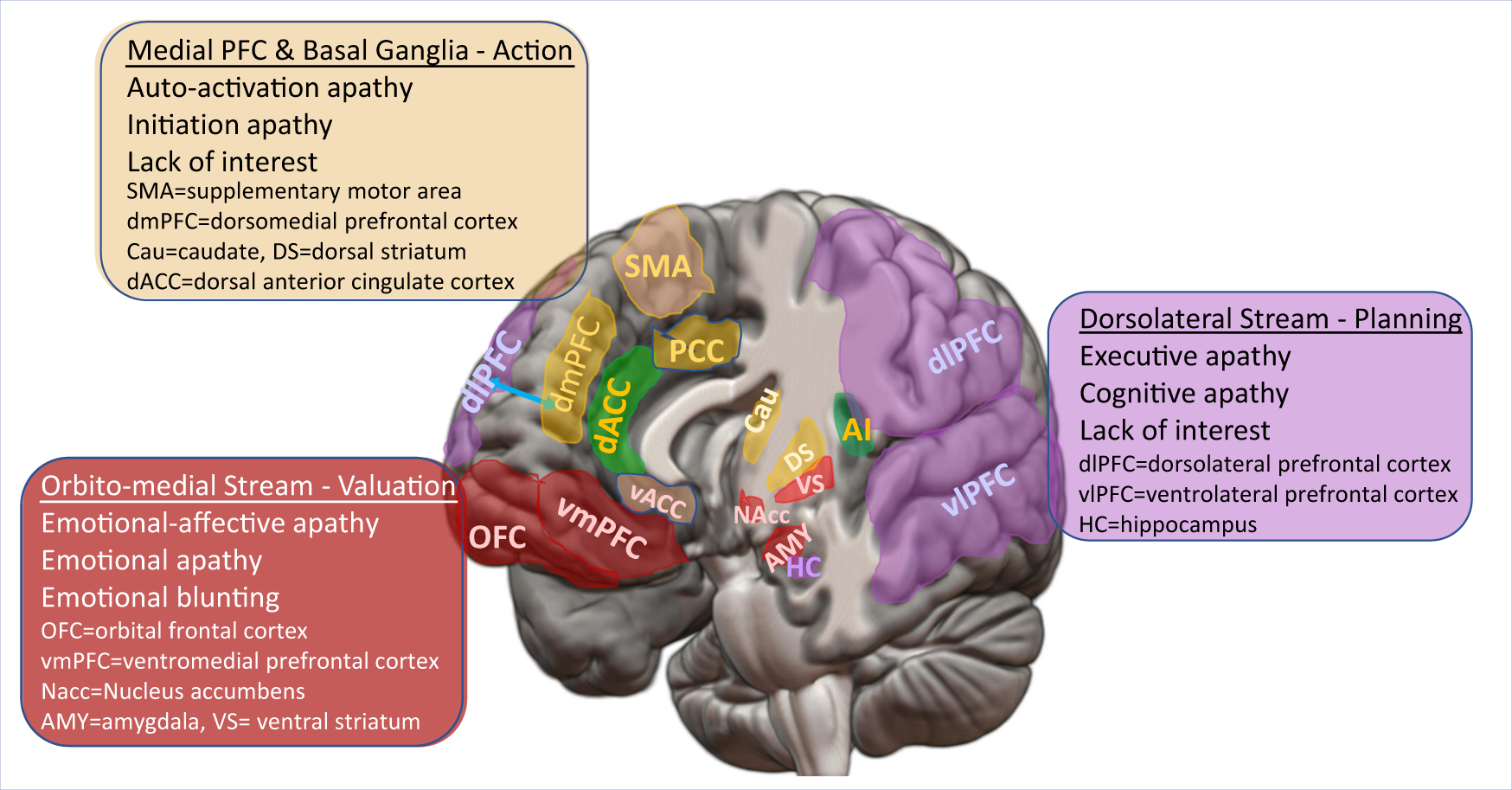
Brain changes in dementia cause apathy. Damage to areas controlling motivation leads to this symptom. Physical illness or pain can make apathy worse. Stress or changes in routine may trigger it. Lack of stimulation also plays a role.
Impact On Daily Life
Apathy affects personal care and hygiene. It reduces participation in hobbies or social activities. Caregivers may find it hard to encourage involvement. This symptom can increase feelings of isolation. Daily routines may become irregular or neglected.
Depression In Dementia
Depression is common in people with dementia. It can affect their mood and daily life. Understanding depression helps caregivers provide better support. It also improves the quality of life for those affected.
Identifying Signs
Depression in dementia shows through sadness and loss of interest. People may stop enjoying activities they once liked. They might feel tired and lack energy. Sleep problems and changes in appetite are common. Sometimes, they show signs of anxiety or irritability. These signs can be hard to notice because dementia also changes behavior.
Underlying Factors
Brain changes from dementia can cause depression. Loss of memory and confusion lead to frustration. Feeling isolated or misunderstood adds to sadness. Physical illness and pain increase risks too. Stress from losing independence may trigger depression. Each person experiences these factors differently.
Effects On Behavior
Depression can make people with dementia quiet or withdrawn. They may stop talking or avoid social contact. Some become restless or show anger more often. Daily tasks like eating or dressing become harder. Their overall health can decline if depression is untreated. Recognizing these changes early helps to manage them better.
Comparing Apathy And Depression
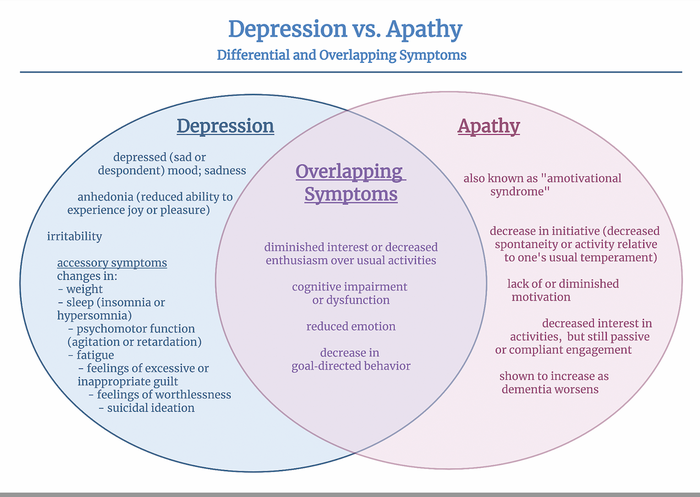
Understanding the difference between apathy and depression in dementia is important. Both affect mood and behavior but in different ways. Knowing these differences helps caregivers and doctors provide better care.
Emotional Differences
Apathy shows as a lack of interest or emotion. People with apathy feel numb or indifferent. Depression involves sadness, hopelessness, and deep emotional pain. A depressed person may cry or express worry. Apathy lacks these strong feelings.
Behavioral Variations
People with apathy often stop doing activities they once enjoyed. They may sit quietly and avoid social interaction. Depression can cause similar withdrawal but also includes restlessness or irritability. Depression may affect sleep and appetite more than apathy.
Response To Treatment
Apathy usually responds well to activities that encourage engagement. Simple tasks or social time can help. Depression often needs medication or therapy to improve mood. Treating depression may take longer and require more support. Recognizing which condition is present guides the right treatment.
Diagnosing Challenges
Diagnosing apathy and depression in dementia is complex. Both conditions share many symptoms. This overlap makes it hard to tell them apart. Doctors must be careful to avoid mistakes. Clear diagnosis is important for better care and treatment. Several factors add to the challenge.
Overlap Of Symptoms
Apathy and depression show similar signs. Both cause low energy and loss of interest. People may seem withdrawn or sad. Changes in sleep and appetite also appear. These shared symptoms confuse diagnosis. Small differences in behavior often get missed.
Assessment Tools
Special tools help doctors measure symptoms. Questionnaires and rating scales are common. They ask about mood, motivation, and activity levels. Tests must suit dementia patients’ abilities. Some tools focus on apathy, others on depression. Combining results helps make a clearer diagnosis.
Role Of Caregivers
Caregivers provide vital information about daily behavior. They notice changes over time. Their observations help distinguish apathy from depression. Caregivers report mood swings and energy levels. Good communication with doctors improves diagnosis accuracy.
Management Strategies
Managing apathy and depression in dementia needs careful planning. Both conditions affect daily life but require different approaches. Understanding the right strategies helps improve comfort and well-being.
Therapeutic Approaches
Therapies can boost mood and motivation. Cognitive-behavioral therapy helps change negative thoughts. Engaging in activities like art or music therapy can lift spirits. Physical exercise also plays a key role. It increases energy and reduces feelings of sadness. Structured routines provide stability and reduce confusion.
Medication Options
Doctors may prescribe medicines to ease symptoms. Antidepressants help with depression in dementia patients. Sometimes, medications improve focus and motivation. It is important to monitor side effects closely. Medication works best combined with therapy and care.
Supportive Care
Support from family and caregivers is vital. Simple daily tasks may need assistance. Encouraging social interaction helps reduce isolation. Creating a calm environment lowers stress and agitation. Regular check-ins ensure needs are met. Emotional support makes a big difference.
Credit: practicalneurology.com
Credit: www.nature.com
Frequently Asked Questions
What Is The Difference Between Apathy And Depression In Dementia?
Apathy involves lack of motivation and interest, while depression includes sadness and hopelessness. Both affect dementia patients differently and require distinct treatments.
How Can Caregivers Identify Apathy In Dementia Patients?
Caregivers should look for reduced initiative, emotional flatness, and lack of engagement. Apathy often causes less activity but not sadness, unlike depression.
Can Depression Worsen Dementia Symptoms?
Yes, depression can accelerate cognitive decline and increase behavioral issues in dementia patients. Early treatment helps improve quality of life and slows progression.
What Treatments Help Manage Apathy In Dementia?
Behavioral therapies, social engagement, and sometimes medication can improve motivation and interest in dementia patients experiencing apathy.
Conclusion
Apathy and depression in dementia can seem alike but differ a lot. Apathy shows as lack of interest, while depression brings sadness. Knowing the difference helps families and doctors provide better care. Treatments work best when the right problem is addressed.
Watching changes closely can guide the right support. Taking small steps improves the quality of life. Stay patient and keep learning about these conditions. Understanding brings hope and comfort to those affected.


 English (Canada)